
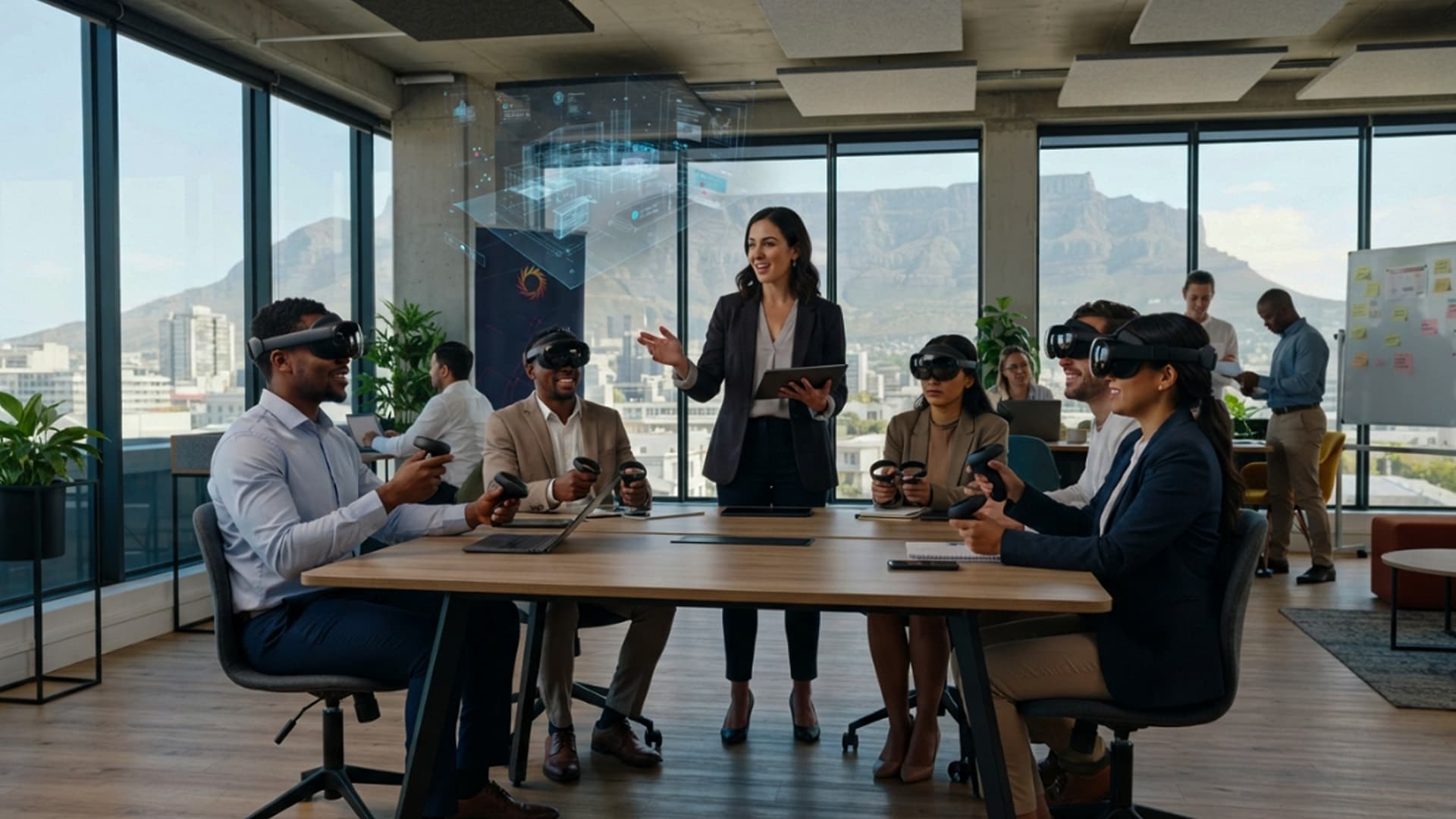
From VR Pilot to Real Business Value: Virtual Reality Solutions in 2026
Virtual reality solutions are moving beyond one-off demonstrations in 2026, helping organisations improve training, collaboration, product visualisation and customer engagement through measurable immersive experiences.
From VR Pilot to Real Business Value: Virtual Reality Solutions in 2026
Virtual reality has reached a more practical stage in 2026. For years, businesses were interested in VR because it was visually impressive and offered a new way to engage customers, train staff or present complex ideas. Many early projects were short demonstrations, event activations or internal experiments designed to test whether people would respond to immersive technology.
That experimentation still has value, but the conversation has changed. Organisations are now asking more specific questions. Can virtual reality reduce training time? Can it help teams understand a product before it is built? Can it create a safer way to practise difficult procedures? Can it give customers a more useful experience than a brochure, video or standard website?
The strongest virtual reality solutions are no longer designed around the headset alone. They are designed around a real business challenge. The headset, software, 3D content, tracking systems and support processes all need to work together to create an experience that is practical, reliable and easy for people to use.
Why Businesses Are Moving Beyond Small VR Pilots
A short VR pilot is often the right place to start. It gives an organisation the opportunity to test an idea, understand how users respond and identify the practical requirements of an immersive project. However, a pilot only becomes valuable when it leads to a clear decision about what should happen next.
In 2026, more businesses are looking for VR projects that can be repeated, updated and used by multiple teams. A training simulation may need to work across several locations. A virtual product demonstration may need to be used at trade shows, sales meetings and customer presentations. A collaborative design environment may need secure access, user management and reliable hardware support.
This is why virtual reality solutions are increasingly treated as part of a wider digital environment rather than a standalone attraction. Organisations need to consider content ownership, device management, user onboarding, technical support and how success will be measured. When these elements are planned early, VR has a better chance of becoming a useful long-term capability.
Starting With a Clear Problem
The most successful VR projects begin with a simple question: what should this experience improve? A business may want to reduce the risk involved in training new employees. A property developer may want buyers to understand a future space before construction is complete. A manufacturer may need teams to review a large design at full scale. An event organiser may want visitors to interact with a brand story rather than only view it.
Once the problem is clear, it becomes easier to choose the right format. Not every project needs a large virtual world or a long headset session. Sometimes a focused five-minute simulation is more useful than a complicated experience with too many features. The aim should be to make information easier to understand, skills easier to practise or decisions easier to make.
A clear objective also makes it possible to measure results. If the goal is training, an organisation can compare completion time, assessment results or confidence levels. If the goal is customer engagement, it can measure participation, dwell time or follow-up conversations. These measures help move the discussion away from whether VR looks impressive and toward whether it creates meaningful value.
Building for Repeat Use
A VR solution should not need to be rebuilt every time it is used. This is especially important for organisations that want to use immersive content across different teams, locations or events. Content needs to be designed so that it can be updated when products, procedures or branding change.
For example, a virtual showroom can be structured so that new products and configurations can be added without redesigning the entire experience. A training module can be updated when safety procedures change. An event activation can keep the same core technology while introducing new campaign content for each launch.
This approach makes the initial investment more useful over time. It also encourages businesses to think about VR as a flexible platform rather than a once-off campaign item.

VR Training Solutions for Safer, More Consistent Learning
Training remains one of the most practical uses of virtual reality. Many workplaces need people to understand procedures that are difficult, expensive or unsafe to practise repeatedly in the real world. A VR simulation can give learners a controlled environment where they can make decisions, repeat tasks and become familiar with a process before working with real equipment or customers.
This is useful in industries such as manufacturing, logistics, healthcare, construction, engineering, retail and hospitality. A learner can practise identifying hazards, following a safety process, operating equipment or responding to a customer scenario. The experience can be repeated as often as needed, allowing people to learn at a pace that supports confidence and competence.
VR does not replace practical instruction or experienced trainers. It gives trainers another way to prepare learners before they enter a live environment. This can make face-to-face training more productive because participants already understand the basic sequence, terminology and risks involved.
Simulating Difficult or High-Risk Scenarios
Some training situations are difficult to recreate safely. A business may not be able to stop a production line for every new employee, create an emergency scenario in a live workplace or give every learner access to expensive equipment. Virtual reality can help by simulating the environment and allowing people to practise the correct response.
The simulation can show the consequences of different choices without exposing anyone to real danger. A learner can identify a hazard, select the correct equipment, follow a shutdown process or respond to a customer complaint. Trainers can then review the session and discuss what went well or where additional support is needed.
The quality of the content matters. A useful training experience needs accurate procedures, realistic scenarios and input from people who understand the work. When those elements are in place, VR can make learning more active and more memorable.
Using Data to Improve Training
One advantage of digital training is that it can provide useful feedback. A VR system can record whether a learner completed steps in the correct order, how long they spent on a task or where they needed help. This information should be handled responsibly, but it can help trainers identify patterns that would be difficult to see in a large group session.
The purpose is not to turn every learner into a score. It is to give trainers better insight into where people need support. If many participants struggle with the same stage of a process, the training content may need to be improved. If a learner is progressing quickly, they may be ready for a more advanced scenario.
This makes VR training more than an engaging activity. It becomes a structured learning tool that can support better planning and more consistent outcomes.

Product Visualisation and Virtual Showrooms
Virtual reality is also changing how businesses present products, spaces and designs. A flat image, brochure or standard 3D model can explain many things, but it does not always communicate scale, layout or detail effectively. VR allows people to step into a product environment and explore it from a more natural point of view.
For property, architecture and interior design, this can mean walking through a future building before construction is complete. For manufacturing and engineering, it can mean inspecting a large product at life size before a physical prototype is available. For retail and automotive brands, it can mean allowing customers to explore different options in a virtual showroom.
The value comes from making a complex decision easier. A client can understand how a room feels, how a product fits together or how different options compare. Sales teams can explain features in a more interactive way, while design teams can identify issues earlier in the process.
Helping Customers Understand What They Are Buying
Customers often need more than a list of specifications. They want to understand how a product will look, feel or fit into their lives. Virtual reality can make that process more intuitive by allowing them to explore a realistic representation at their own pace.
A customer considering a property can move through rooms and understand the relationship between spaces. Someone looking at a vehicle can inspect the interior, compare configurations and see details that may not be visible in a brochure. A business buyer can explore industrial equipment without needing the full product to be transported to a meeting or exhibition.
This type of experience can support stronger conversations between customers and sales teams. Instead of trying to describe a feature, the team can show it. Instead of asking people to imagine scale, they can let them experience it directly.
Supporting Better Design Decisions
VR can also help internal teams make decisions before a project reaches the expensive stages of production or construction. Designers, engineers and stakeholders can review a model at full scale, identify issues and discuss changes while everyone is looking at the same environment.
This is particularly useful when a project involves multiple disciplines. A design team may focus on appearance, while an operations team focuses on usability and a technical team focuses on installation or maintenance. A shared virtual model can make these conversations more practical because people can see how decisions affect the whole environment.

VR Events That Give Visitors a Reason to Participate
VR events remain an important part of immersive technology, particularly for brands that want to create a memorable experience at exhibitions, launches, conferences and public activations. The strongest event experiences do more than place visitors inside a virtual environment for a few minutes. They give people a reason to participate, talk about what they experienced and connect it to the wider brand message.
A VR event can turn a small physical footprint into a much larger story. A visitor can explore a destination, enter a product environment, take part in a challenge or experience a scenario that would be difficult to recreate physically. This makes VR useful for industries ranging from tourism and automotive to property, entertainment and corporate communication.
The design needs to suit the event environment. Public activations often work best when the experience is easy to understand, short enough to manage queues and supported by staff who can help first-time users. A clear beginning, engaging middle and satisfying finish can make a major difference to how people remember the experience.
Designing for the Full Guest Journey
The headset experience is only one part of a successful VR event. Visitors need to understand what they are about to do, feel comfortable using the equipment and have a clear transition back into the physical event after the session ends.
This may include a visible invitation to participate, a short explanation from event staff, simple hygiene and headset management processes, and a follow-up interaction after the experience. A guest might receive a product recommendation, a digital recap, a photo opportunity or an invitation to speak with a team member.
When the full journey is considered, VR becomes part of the event strategy rather than a separate attraction. It can help create leads, support product education or simply give people a memorable reason to spend more time with a brand.
Choosing Hardware That Matches the Experience
Hardware selection is important, but it should follow the needs of the project. Some VR experiences require high-end PC-powered systems for detailed visualisation, simulation or multi-user environments. Others work better with standalone headsets that are easier to transport, set up and manage at events.
HTC VIVE continues to be associated with enterprise-focused VR environments, including training, simulation and professional visualisation, while the broader market offers a range of standalone and PC-connected options. The best choice depends on factors such as visual quality, tracking requirements, session length, mobility, hygiene, technical support and the number of people expected to use the experience.
A good solution considers the practical details from the beginning. Headsets need to be charged, cleaned, fitted correctly and supported by staff who understand the experience. These operational factors are just as important as the visuals inside the headset.

Planning a Virtual Reality Solution That Can Scale
A successful VR project needs a plan for what happens after the first launch. If the experience proves useful, the organisation may want to use it in more locations, update it for new products or expand it to new teams. Planning for this early can reduce costs and make future improvements easier.
Scalability does not always mean deploying hundreds of headsets. It may simply mean creating a solution that can be used reliably by different staff members, transported to events or updated without rebuilding the entire application. The right level of scale depends on the business objective.
Organisations should also think about support. Who will manage the devices? Who will update the content? How will users receive help? How will the project be measured? These questions may sound operational, but they are often what determine whether a VR pilot becomes a long-term solution.
Measuring What Matters
The best measurement approach depends on the purpose of the experience. Training projects may focus on completion time, confidence, assessment results or incident reduction. Sales and product visualisation projects may focus on engagement, customer understanding or shorter decision cycles. Event projects may focus on participation, dwell time, lead quality or post-event feedback.
It is useful to choose a small number of meaningful measures before the project begins. This gives teams a way to assess whether the experience is delivering value and where it can be improved. It also helps stakeholders understand why immersive technology is being used and what outcome it is expected to support.
Virtual reality solutions are becoming more practical because businesses are approaching them with clearer objectives. In 2026, the opportunity is not simply to create something that looks advanced. It is to build an experience that helps people learn, understand, decide or engage in a way that traditional formats cannot easily match.
Author: Elisha Roodt
Virtual Realities shares practical guidance on 360° virtual tours, VR walkthroughs, and PropTech trends shaping South Africa's property market.