

South Africa's Ports in VR: Transnet School Activation Success
Author
Elisha Roodt
Date Published
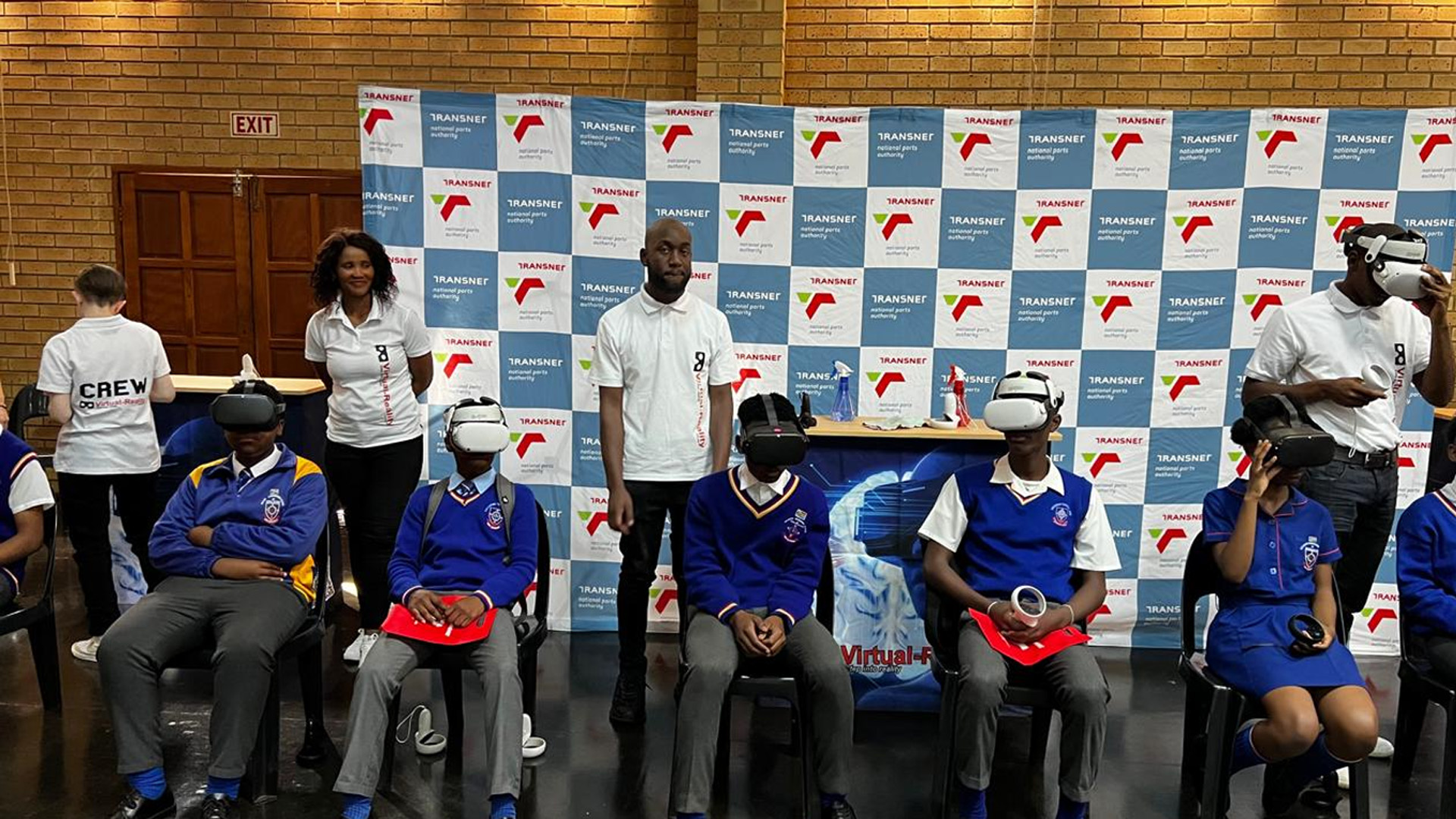
Last Thursday, September 19th, we had the exciting opportunity to showcase Virtual Reality (VR) technology to students at a local school in partnership with Transnet. The primary aim of this event was to educate young minds about the significance of South Africa's major ports, using VR as a transformative tool to make learning both engaging and interactive. Our goal was to elevate traditional education by immersing the students in a virtual experience that not only captured their attention but also brought these vital infrastructures to life in a way that textbooks alone could not achieve.
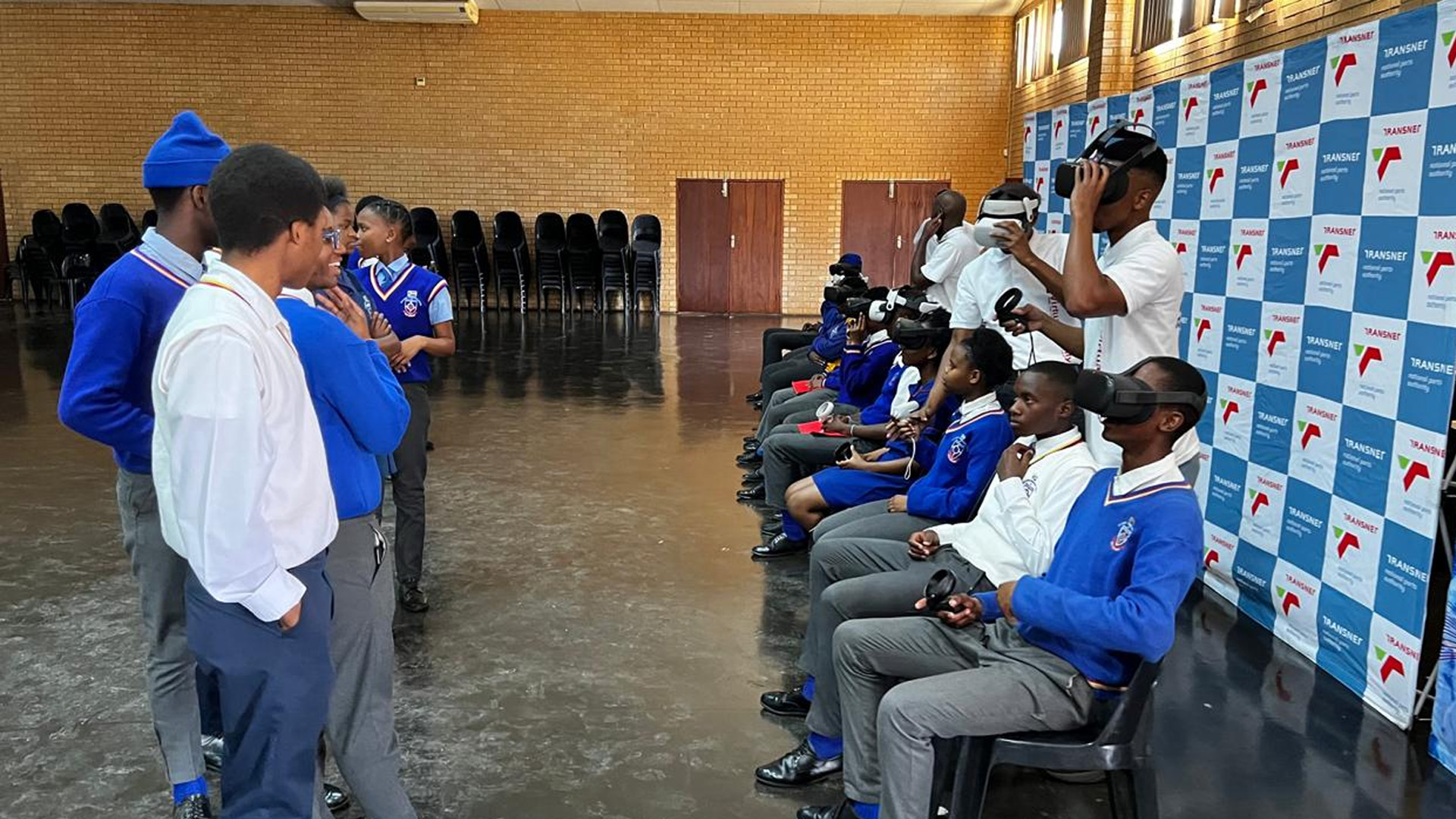
We arrived equipped with 10 VR headsets, each loaded with eight specially curated 360-degree videos designed to offer virtual tours of South Africa's major ports. These immersive experiences allowed the students to explore bustling ports like Cape Town and Port Elizabeth, observe massive cargo operations, and understand how these facilities contribute significantly to the nation's economy. It was a unique opportunity for them to step into the world of maritime logistics and port operations, offering insights that extend well beyond the confines of the traditional classroom setting.
The students' reactions were immediate and enthusiastic. As soon as they donned the headsets, they were virtually transported to various ports, from Durban's bustling container terminals to Saldanha Bay's extensive iron ore loading docks. The 360-degree videos provided a unique perspective, enabling them to see operations from all angles as if they were standing right on the docks. They could observe workers coordinating complex logistics, watch machinery in action, and see the ships being loaded and unloaded, which made complex subjects much easier to grasp through hands-on, virtual interaction.
This VR event was far more than just an educational tool; it was designed to ignite curiosity and inspire the students. By showcasing the vital role that ports play in international trade and their immense impact on South Africa's economy, we hope to inspire interest in future careers across various sectors, including logistics, engineering, and international trade. The VR experience transformed what could have been a typical classroom lecture into an unforgettable learning journey, opening the door to new possibilities and perspectives. Through this engaging approach, we aimed to foster a new generation of thinkers and innovators who will contribute to the growth and development of South Africa's economy.
The Importance of South Africa's Ports
South Africa's strategic location at the southern tip of Africa positions it as a vital player in global maritime trade. The country boasts eight major ports, each serving as essential gateways for international goods, encompassing a diverse range of products from valuable minerals and agricultural exports to manufactured goods. These ports not only facilitate trade but also contribute significantly to South Africa's economic stability and growth. Transnet, the state-owned enterprise responsible for managing the country's port and rail infrastructure, plays a crucial role in ensuring the seamless operation of these vital hubs. Their commitment to efficiency and innovation is fundamental in enhancing the competitiveness of South Africa's trade routes.
The VR experience provided to students offered a unique opportunity to understand the intricate logistics involved in port operations. Through immersive technology, they gained insights into how Transnet meticulously coordinates various processes, from cargo handling to rail transportation. This experience illuminated the complexities of maritime logistics, allowing students to appreciate the detailed planning and execution required to keep goods flowing smoothly from one point to another. They learned how these systems interconnect and support not just the economy but also their everyday lives, influencing everything from the availability of products in stores to the job market in their communities.
The educational value of the VR experience extended beyond mere observation; it fostered a sense of awareness about the global supply chain and the importance of ports in facilitating trade. By visually witnessing the dynamic environments of the ports, students developed a deeper understanding of how international commerce operates. They began to appreciate the significance of South Africa's ports in the larger context of global trade networks, highlighting their role in connecting local producers to international markets.
This initiative aimed not only to educate but also to inspire future generations. By illustrating the critical role that ports and logistics play in the economy, we hope to spark interest in fields such as logistics, supply chain management, and international trade. As students envision potential career paths within these industries, they can recognize the opportunities available to them, ultimately contributing to a more robust economic future for South Africa.
The Ports We Showcased
The virtual tours featured eight of South Africa's key ports, each showcasing unique aspects of the country's maritime industry and their critical roles in global trade.
Together, these ports represent the diverse and dynamic nature of South Africa's maritime landscape, each contributing to the country's economic framework and providing students with invaluable insights into the world of logistics and international trade.loaded onto ships.
Bringing the Ports to Life with VR
Utilizing a mix of Oculus Quest 1 and Quest 2 headsets, we crafted a high-quality, immersive experience tailored specifically for the students. Each headset was preloaded with a selection of 360-degree videos, allowing students the freedom to choose which port they wanted to explore. This personalized approach significantly enhanced the learning experience, making it more interactive and engaging. By giving students agency over their virtual exploration, we fostered a sense of ownership and excitement about what they were learning.
For many students, this marked their first encounter with virtual reality, and their reactions were nothing short of priceless. From wide-eyed wonder to enthusiastic comments like, 'It feels like I'm really there,' the immediate impact of the VR experience was palpable. They could virtually stand on the docks, observe operations up close, and witness firsthand how vital these ports are to the country's economy. The ability to see large container ships being loaded, cranes moving with precision, and workers coordinating seamlessly brought the abstract concepts of logistics and trade to life in a way that traditional education methods often cannot achieve.

A New Way to Learn
Virtual Reality offers a groundbreaking method for engaging students with subjects like geography, infrastructure, and technology. Traditional learning tools, such as textbooks and videos, have their limitations in conveying the scale and complexity of real-world operations. In contrast, VR transforms students into active participants in their learning journeys, allowing them to explore dynamic environments and interact with content in a way that is both memorable and fun.
The immersive nature of VR effectively turned abstract lessons into tangible experiences. Students could look around in all directions, witnessing the intricate coordination between workers, machinery, and ships. This level of engagement not only captivated their attention but also deepened their understanding of the scale of port operations. They could appreciate the complexities involved in managing such vast facilities and the critical role these ports play in facilitating global trade.
The hands-on experience provided by VR promotes retention and understanding. Students are more likely to remember what they learned when they can visualize and interact with the subject matter. As they explored the ports, they were not just passive recipients of information; they were actively constructing knowledge, which is a vital aspect of effective learning.
By integrating Virtual Reality into education, we are paving the way for a new era of learning'one that embraces technology to make complex subjects more accessible and engaging. This innovative approach not only prepares students for future careers in logistics and trade but also inspires a greater appreciation for the infrastructure that supports our economy. Through this experience, we hope to cultivate a generation of learners who are curious, informed, and ready to explore the opportunities that lie ahead.
The Future of VR in Education
This activation served as a powerful demonstration of the potential of Virtual Reality (VR) as an educational tool. The enthusiastic feedback from both students and teachers was overwhelmingly positive, with many expressing genuine excitement about the possibilities of integrating VR into future lessons. The idea of virtual field trips and the ability to explore complex systems like port logistics resonated strongly with everyone involved. It became clear that VR has the potential to revolutionize the way we teach and learn, providing an engaging, immersive experience that traditional methods often lack.
The success of this event lies not only in the factual information we delivered but also in the impactful experiences we created. By immersing students in the dynamic world of maritime logistics, we offered them an educational journey that transcended the boundaries of a conventional classroom. The hands-on, interactive nature of VR allowed students to form connections with the material that will likely leave a lasting impression, enhancing their understanding of how the global economy functions and the critical role of South African ports.
Looking ahead, the possibilities for VR in education are boundless. Imagine students virtually visiting historical landmarks, exploring the human body in 3D, or participating in complex scientific experiments without the constraints of physical limitations. Such applications of VR can enhance engagement, foster curiosity, and make learning more relatable. As educators continue to innovate and explore new technologies, VR stands out as a transformative tool that can cater to various learning styles and needs.
Additionally, integrating VR into educational curricula can bridge gaps in accessibility, allowing students from diverse backgrounds to experience resources and environments that may otherwise be out of reach. This inclusivity can enrich educational experiences and provide equal opportunities for all students to explore and engage with different subjects.
As we reflect on the impact of this VR event, we are filled with optimism about the future. VR has opened new doors for education, providing fresh avenues for exploration and understanding. We are excited to see how this technology will evolve and the innovative ways it will be applied in classrooms. The journey has just begun, and we look forward to continuing to explore the potential of VR in education, inspiring and shaping the minds of the next generation. By embracing this technology, we are not only enhancing the educational experience but also preparing students for a future where technology and learning are increasingly intertwined.

The Future Of Vr In Education